There’s a strange thing about household water: when everything is working properly, nobody gives it much thought. You turn on the faucet, fill a glass, wash the dishes, take a shower. Done.
But when the water starts behaving differently, it becomes hard to ignore.
Maybe you notice cloudy water in the morning. Perhaps there are tiny particles sitting at the bottom of a glass, or your faucet seems to be collecting more buildup than usual. A filter may suddenly need replacing far more often than expected. These aren’t necessarily signs of a serious problem, but they are reasons to pay closer attention.
Water quality is influenced by its source, the surrounding environment, plumbing, and treatment equipment. Because of that, solving a water problem isn’t always about buying a more powerful filter. Sometimes, the best answer is simply understanding what’s happening first.
The Water Source Tells You a Lot
Municipal water and private well water come with different considerations. Public supplies are treated and monitored through established systems, while homeowners with private wells are responsible for understanding and maintaining their own water supply.
Groundwater can naturally contain minerals and other substances picked up as it moves through soil and rock. Conditions can also change because of weather, construction, land use, well maintenance, or aging equipment.
This is why homeowners shouldn’t assume that water problems are identical from one property to another. Two houses on the same road can have noticeably different water characteristics.
Before choosing treatment, it helps to understand where the water comes from and what has changed, if anything.
Sediment Can Be More Than an Eyesore
Small particles in water can be frustrating. You may see them floating in a glass or notice a gritty residue around fixtures.
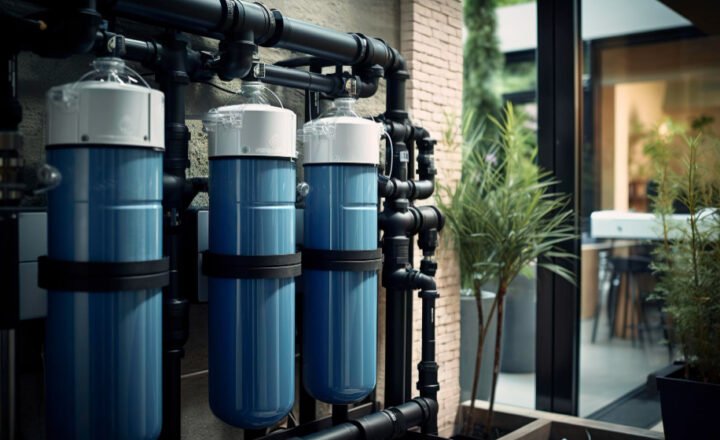
In these situations, sediment protection can play an important role in a broader water-treatment strategy. Sediment may include sand, silt, clay, or other physical particles entering the water supply.
Private wells can be particularly susceptible to sediment under certain conditions. Heavy rainfall, changes in groundwater movement, disturbed soil, or issues with the well itself can contribute to an increase in particles.
A properly selected sediment filter can help protect plumbing fixtures and downstream treatment equipment. But filter selection matters. A cartridge that is too small may clog quickly, while a filter with unsuitable performance characteristics may not capture the particles that are actually causing trouble.
Don’t Confuse Filtration With Softening
Water treatment terms can get confusing, especially when products are marketed as if one device can solve everything.
Filtration generally refers to removing specific particles or substances using a filter medium. Water softening is primarily intended to reduce hardness minerals such as calcium and magnesium.
The difference matters.
If a homeowner has scale around faucets, a softener may be more relevant than a basic sediment filter. If the issue is visible particles, filtration may be the appropriate starting point. If there’s an iron problem, a specialized treatment approach may be required.
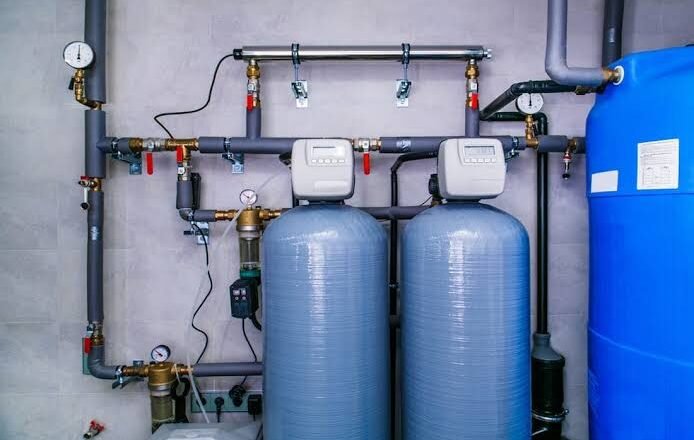
In some homes, multiple stages work together. That’s not necessarily overkill. It can actually be more efficient when each component has a clearly defined job.
Testing Removes the Guesswork
Taste and appearance are useful clues, but they don’t tell the whole story.
Professional testing can provide a more detailed picture of water chemistry and help identify issues that aren’t visible. Depending on the source and testing objectives, analysis may include hardness, pH, iron, manganese, bacteria, nitrate, dissolved solids, or other water-quality characteristics.
For private wells, testing can be particularly valuable because groundwater conditions can change over time. A baseline also gives homeowners something to compare with future results.
Perhaps the most useful benefit is avoiding unnecessary treatment. There’s little sense in installing equipment for a contaminant that isn’t actually present.
Testing first may seem like an extra step, but it can save both money and frustration later.
Your Plumbing Could Be Part of the Problem
Not every water issue originates at the well or municipal supply.
Older plumbing can affect taste, color, and particles. A corroded section of pipe can introduce material into the water after it enters the property. A clogged faucet aerator can make flow appear weaker. A filter that hasn’t been replaced on schedule can restrict pressure.
Pay attention to patterns.
If only one faucet has discolored water, the issue may be localized. If every fixture has the same problem, the source or main plumbing becomes more likely. If the problem appears only after water has been sitting overnight, the plumbing deserves a closer look.
These observations can make troubleshooting much easier.
Think About Water Flow Before Installing Equipment
Treatment equipment must be able to keep up with the household.
A small system may work perfectly when one faucet is running but struggle when several fixtures operate simultaneously. Filters also become more restrictive as they collect material.
Imagine a typical busy morning: someone is showering, the washing machine is running, and another person is filling a sink. That’s the real test of a treatment system.
Proper sizing should account for household water demand, flow rate, available installation space, and the characteristics of the incoming water.
A system shouldn’t improve one aspect of water quality while creating a new pressure problem.
Maintenance Is Part of Water Treatment
No filtration system is completely maintenance-free.
Filter cartridges eventually need replacement. Some treatment media require servicing. Water softeners may need routine attention, and specialized equipment can have its own maintenance schedule.
The annoying part is that neglected equipment doesn’t always fail dramatically. Performance often declines slowly.
You might notice water pressure dropping a little. Then taste changes. Then sediment begins appearing again. By the time the problem becomes obvious, the equipment may have been overdue for service for quite a while.
A basic maintenance calendar can prevent this. Write down when filters are installed and replaced, keep track of service visits, and pay attention to changes in water quality.
Good Treatment Should Be Easy to Understand
One of the best signs of a sensible treatment plan is that you can explain why every component is there.
A professional should be able to tell you what a filter removes, what a softener addresses, how often components need maintenance, and what changes you should expect after installation.
If the explanation sounds like a collection of complicated technical terms without a clear purpose, slow down. Ask questions.
You don’t need to become a water-treatment expert. You simply need enough information to make a confident decision.
Look for Clear Advice, Not Just More Equipment
A good treatment provider should focus on the water problem rather than trying to sell the largest possible system.
That means providing clear recommendations based on testing, household needs, water usage, and practical installation considerations. It also means being honest when a particular piece of equipment isn’t necessary.
Sometimes the right solution is surprisingly modest. A properly sized sediment filter and routine maintenance may solve the problem. Another property might genuinely need several treatment stages.
The answer should come from the water—not from a product catalog.
Better Water Starts With Understanding
Water treatment doesn’t have to be complicated, but it does deserve a thoughtful approach.
Pay attention to changes. Understand your water source. Test when necessary. Separate problems like sediment, hardness, taste, odor, and specific contaminants instead of treating them as one big issue.
Then choose equipment that has a clear purpose and maintain it properly.
That’s a much better strategy than chasing the newest technology or assuming the most expensive system must be the best one. When treatment is designed around actual water conditions, the results are usually more practical, more predictable, and easier to maintain.
And in the end, that’s what most homeowners really want: water that works the way it should, without turning another ordinary part of daily life into a constant headache.