Water problems have a habit of becoming part of the daily routine. You wipe the faucet, scrub the shower door, rinse the glass again, and tell yourself you’ll deal with it properly someday. Then the same stains come back. Or perhaps the water tastes strange, smells unpleasant, or leaves deposits that seem impossible to keep up with.
At some point, a basic filter may simply not be enough.
That doesn’t mean every home needs an elaborate treatment system. It means the solution should match the problem. Water chemistry varies from one property to another, and a filter that works beautifully for one household might accomplish very little in another.
The first step is figuring out what’s actually happening.
Start With the Problem, Not the Product
It’s easy to browse water-treatment equipment and become overwhelmed by technical names. Carbon filters, membranes, treatment media, softeners, iron filters—it can feel like every product claims to solve everything.
A better approach is to begin with the symptoms.
Are you seeing mineral scale? Is the water leaving orange stains? Does it have a sulfur-like smell? Are you worried about a particular contaminant? Does the issue occur at every faucet or only at one?
Those questions help narrow the field considerably.
Water testing can provide even more useful information. Rather than guessing based on taste or appearance, testing can reveal characteristics such as hardness, iron, manganese, pH, and other water-quality factors.
Some Water Problems Need Specialized Filtration
A standard sediment cartridge is useful for particles, but it isn’t designed to solve every water-quality concern.
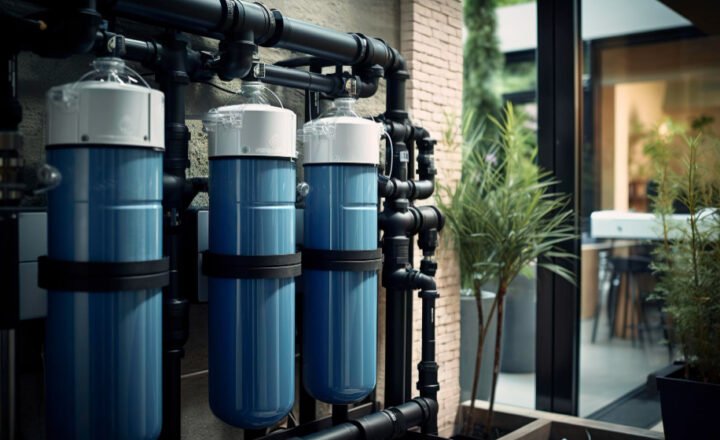
specialty water filters are developed for more specific treatment goals. Depending on the technology, specialized systems can target issues involving iron, sulfur, chlorine, certain chemicals, or other substances.
The important word here is “specific.” A specialty filter isn’t automatically better simply because it sounds more advanced. It needs to be appropriate for the substance you’re trying to reduce.
Before purchasing one, ask what the filter is designed to remove, what conditions it requires to work properly, and how often the media or cartridge needs attention.
A little research upfront can save a lot of frustration later.
Hard Water Leaves Plenty of Clues
One of the easiest water-quality problems to recognize is mineral buildup.
hard water contains elevated levels of minerals such as calcium and magnesium. These aren’t usually visible when the water first comes from the faucet, but they can become very noticeable over time.
Look around a bathroom and you’ll often find the evidence. White deposits may form around faucets. Shower glass can develop a cloudy film. Water heaters and other appliances may accumulate scale internally.
Hard water can also affect the way soap behaves, leaving a less satisfying lather and sometimes making cleaning feel like more work than it should.
Water softeners are commonly used to reduce hardness throughout the home. But before choosing one, testing the water is still worthwhile. Knowing the hardness level helps determine whether treatment is necessary and what system size may be appropriate.
Smelly Water Deserves Investigation
Few household experiences are as unpleasant as turning on the tap and getting hit with an unexpected odor.
smelly water can have several possible causes. A sulfur-like odor is sometimes associated with hydrogen sulfide, while other smells may come from organic matter, chlorine, plumbing issues, or specific water chemistry.
Private wells can present their own challenges because groundwater conditions vary. Municipal supplies may have different causes, particularly if the odor appears suddenly.
Don’t simply mask the smell with a fragrance or assume that an unpleasant odor automatically means the water is dangerous. Instead, investigate where the smell originates and whether it occurs with hot water, cold water, or both.
That information can help point toward the source.
Hot Water and Cold Water Can Tell Different Stories
Here’s a simple troubleshooting trick that can provide surprisingly useful information.
Check whether the odor or discoloration appears only when using hot water. If cold water smells normal but hot water doesn’t, the water heater may deserve attention.
In some homes, water-heater conditions can contribute to sulfur odors. The solution might involve maintenance rather than replacing the home’s entire filtration system.
On the other hand, if both hot and cold water have the same problem, the source may be further upstream.
This is why diagnosis matters. You don’t want to install expensive treatment equipment to solve a problem that actually begins with one neglected component.
One Filter Doesn’t Necessarily Do Everything
There is a common misconception that a single “whole-house filter” should remove every undesirable substance.
In reality, water treatment is more like a toolbox.
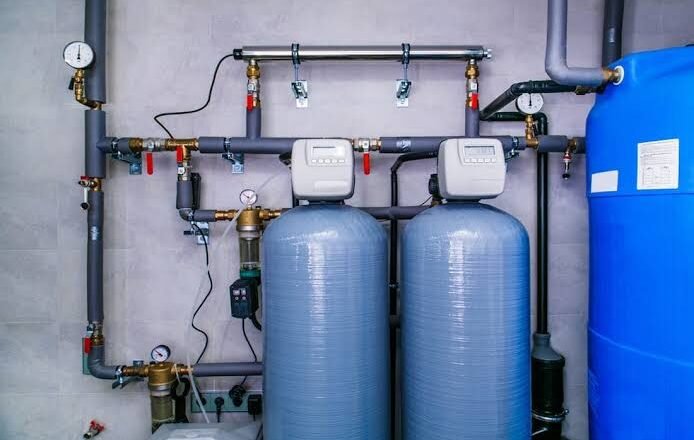
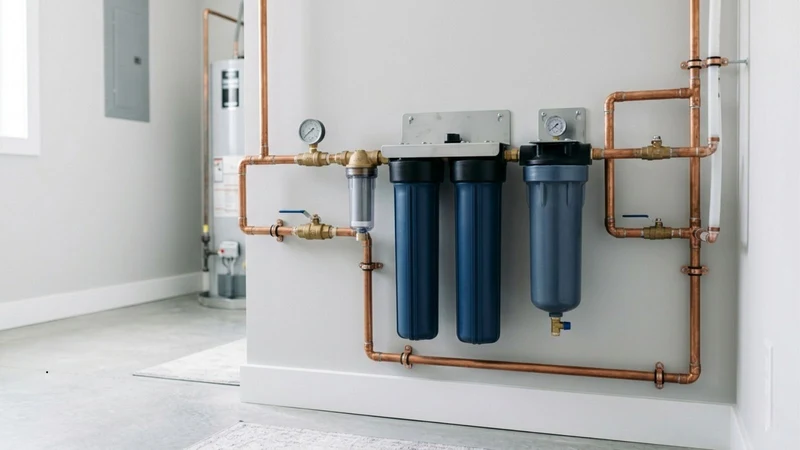
One filter may handle sediment. Another may reduce chlorine and improve taste. A softener may address hardness. A specialized iron system could tackle staining. A reverse osmosis unit might be used for highly treated drinking water at the kitchen sink.
These technologies can sometimes work together, but they shouldn’t be combined randomly.
Each stage should have a purpose. When treatment is designed around the actual water chemistry, the overall system is usually more efficient and easier to maintain.
Don’t Ignore Flow Rate
Treatment systems have limits. Even a high-quality filter can become a problem if it isn’t sized for the home’s water demand.
Think about peak usage. Two showers running at once, a washing machine filling, and someone using the kitchen faucet can put considerable demand on the plumbing.
A system that’s too restrictive may reduce flow and create an annoying pressure problem. That’s why flow rate, pipe size, household size, and expected usage should be considered before installation.
A professional assessment can help avoid the “Why did my water pressure suddenly disappear?” conversation after the system is already installed.
Maintenance Is Part of Performance
Water filters aren’t set-and-forget appliances.
Cartridges have capacity limits. Treatment media eventually becomes exhausted. Some systems require cleaning, regeneration, or periodic inspection.
If maintenance is ignored, performance can gradually decline. The water may begin tasting different, pressure can drop, or staining may return.
Keep records of filter changes and service dates. It doesn’t need to be complicated. A note on your phone is enough.
When selecting equipment, also ask how easy the routine maintenance will be. The best system in the world won’t help much if maintaining it becomes such a hassle that everyone starts putting it off.
Be Careful With Big Promises
Water treatment marketing can sometimes make the process sound almost magical. One product promises perfect water. Another claims to solve every possible problem.
Real treatment is more specific than that.
Ask for measurable information. What does the system reduce? Under what conditions? What is the expected capacity? Does independent certification apply to the claim you’re interested in?
If you’re dealing with a known contaminant, those details are especially important.
A trustworthy water professional should be willing to explain the technology in plain English. If the explanation sounds unnecessarily mysterious, that’s a good reason to ask more questions.
The Right Treatment Should Feel Practical
Good water treatment isn’t about filling a mechanical room with equipment. It’s about solving problems that affect your home.
If stains keep appearing, find out what’s causing them. If the water smells strange, investigate the source. If mineral scale is taking over the bathroom, determine the hardness level before buying a softener.
Testing gives you information. Properly selected treatment gives you a solution. Maintenance keeps that solution working.
That’s really the heart of the matter.
Your water doesn’t need to be transformed into something exotic. It simply needs to be appropriate for your household and treated according to its actual characteristics. Once you understand what’s coming through your pipes, even difficult water problems become much less mysterious—and a whole lot easier to manage.