Water has a funny way of becoming invisible in our daily lives. We turn on the tap, fill a glass, start the dishwasher, take a shower and move on. It’s only when the water starts leaving spots, tasting unusual or making appliances work harder that we stop and wonder what’s actually happening inside the pipes.
The good news is that most household water concerns can be understood with a little testing and the right information. You don’t necessarily need a complicated setup, either. The best treatment plan is usually the one that addresses the problems your home actually has, rather than trying to solve every possible water issue at once.
Start With What Your Water Is Doing
Before choosing equipment, pay attention to the clues around your home. White scale around faucets can point toward hardness. Orange or reddish staining may suggest iron. Sediment, unusual odors or changes in taste can indicate other water-quality characteristics worth investigating.
Some issues are easy to see, while others aren’t. That’s why a water test is such a useful starting point. It gives you information about the water instead of relying on assumptions.
Your water source matters, too. Municipal water and private well water can have very different characteristics. Even neighboring homes may experience differences depending on plumbing, source conditions and household usage.
Once you understand the water, choosing treatment becomes much less of a guessing game.
When Water Softeners Make Sense
Hard water is one of the most common household complaints. Calcium and magnesium naturally occur in many water supplies, and when concentrations are high, they can create scale throughout the home.
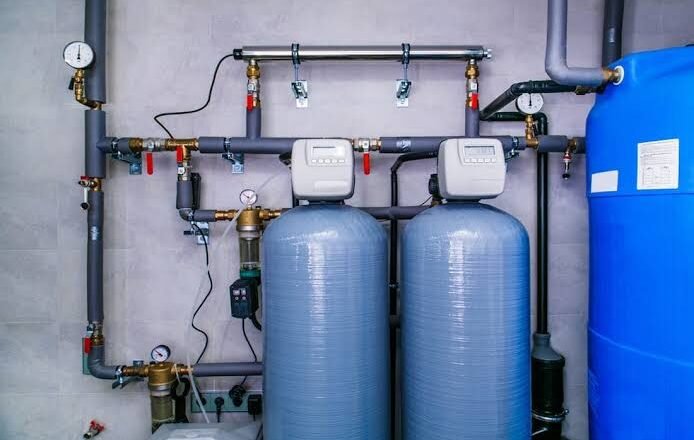
Water softeners are designed specifically to reduce hardness. Traditional systems use an ion-exchange process that removes calcium and magnesium from the water, replacing them with sodium or potassium ions.
The practical benefits can be surprisingly noticeable. Soap may rinse more easily, shower glass can develop fewer mineral spots and scale buildup may be reduced inside water-using appliances.
But sizing matters. A system that’s too small may struggle with household demand, while an oversized system can waste resources and cost more than necessary. Household size, water consumption and measured hardness should all be considered before installation.
Drinking Water Deserves Its Own Attention
Whole-house treatment and drinking-water treatment aren’t necessarily the same thing. Many homeowners want treated water throughout the property but also want an especially high level of filtration at the kitchen faucet.
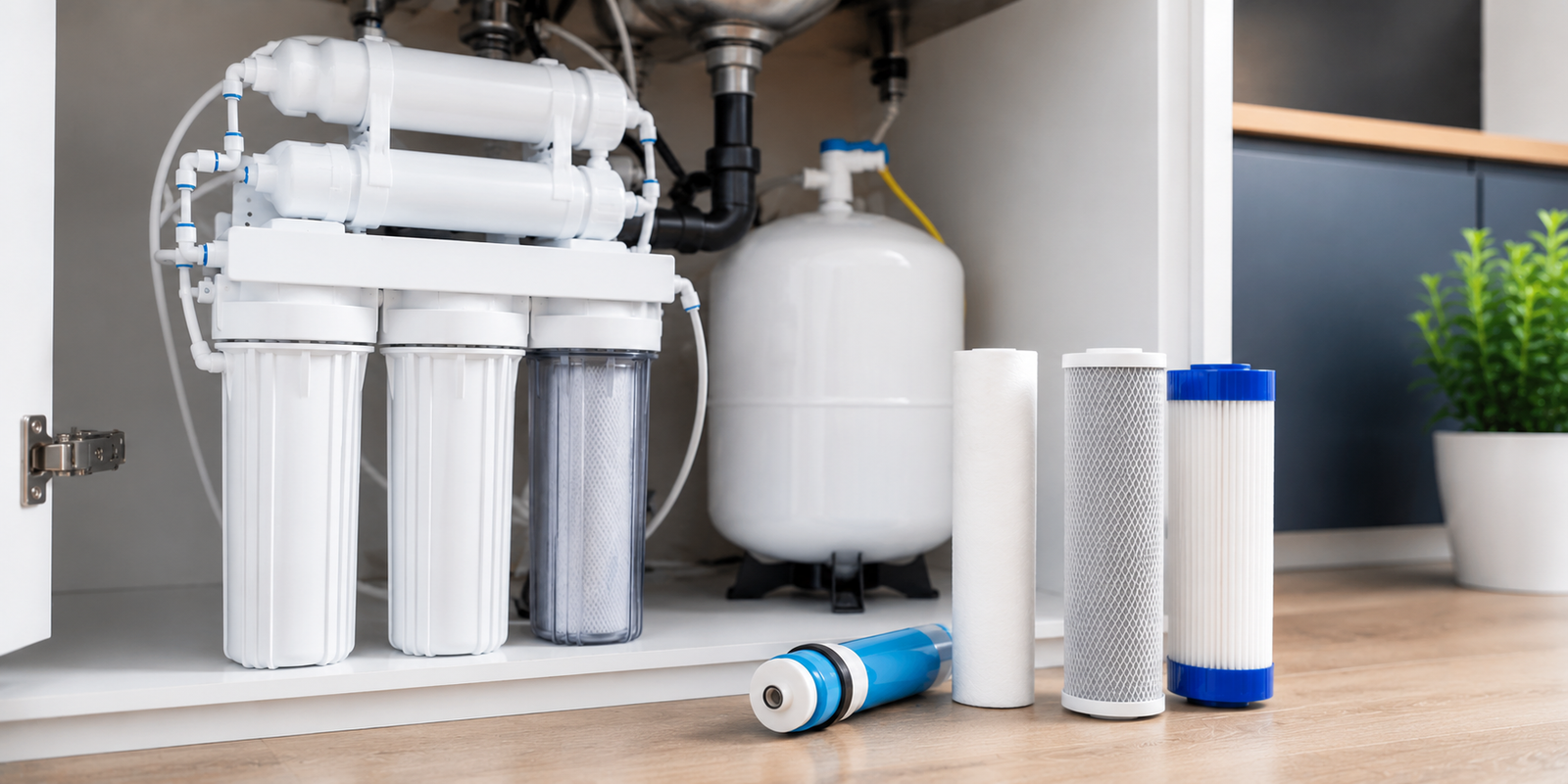
This is where reverse osmosis drinking water can be useful. Reverse osmosis systems push water through a semipermeable membrane under pressure, helping reduce many dissolved substances. They’re often installed beneath a kitchen sink and can be paired with prefilters and post-filters to improve performance and taste.
It’s a particularly practical option for drinking, cooking, coffee and other kitchen uses. However, reverse osmosis isn’t automatically the answer for every household. The incoming water should be tested first, and the system should be selected based on the specific treatment goal.
There’s also a maintenance side to consider. Filters and membranes need periodic replacement, so homeowners should understand those requirements before purchasing a system.
When the Whole House Needs Treatment
Sometimes the issue isn’t limited to drinking water. If hard water is affecting showers, laundry, plumbing fixtures and appliances, treating only one faucet won’t solve the larger problem.
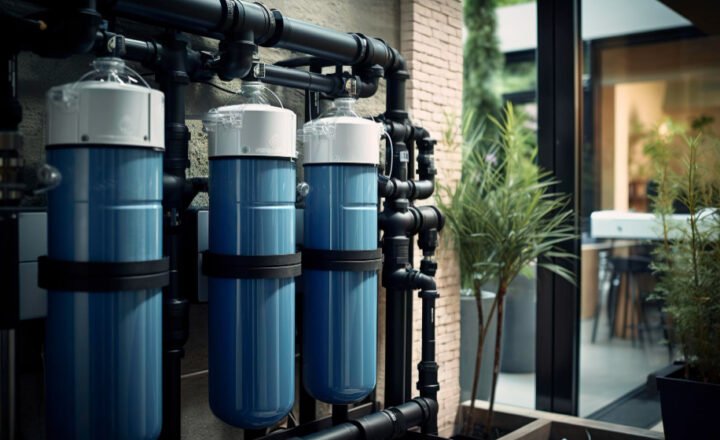
That’s where whole home water treatment may make sense. A whole-home approach treats water as it enters the property, depending on the system design and the problems being addressed.
This can be particularly helpful when multiple water-quality concerns exist. A household might need softening for hardness, filtration for sediment and additional treatment for another specific contaminant or characteristic.
The exact combination should come from water testing. More equipment isn’t automatically better. In fact, unnecessary treatment can create additional maintenance and operating costs without providing a meaningful benefit.
Well Water Requires a Little More Attention
Private well owners have a different relationship with their water. Instead of relying on a centralized utility to manage the supply, they are responsible for understanding and monitoring their own well.
Well water can contain naturally occurring minerals and may develop issues involving hardness, iron, manganese, sulfur odors or sediment. Conditions can also change over time.
Regular testing is therefore a sensible habit for well owners. If the water changes in taste, appearance or odor, don’t simply assume the treatment equipment needs replacing. The underlying water chemistry may have changed.
A professional assessment can help determine whether filtration, softening, disinfection or another treatment method is appropriate.
Think About Appliances, Too
Water quality affects more than the glass in your hand.
Water heaters, dishwashers, washing machines, coffee makers and other appliances all interact with the household water supply. Hardness and mineral deposits can create scale, particularly in equipment that heats water.
Reducing unnecessary mineral buildup can make maintenance easier and may help appliances operate under better conditions.
Of course, treatment isn’t a substitute for proper appliance maintenance. Filters still need changing, water heaters still need servicing and equipment still has a useful lifespan. But better water conditions can be one part of a broader strategy for protecting household equipment.
Don’t Buy More Than You Need
Water treatment can become confusing when homeowners start comparing systems. One company recommends a softener. Another suggests reverse osmosis. Someone else says a whole-house filter is essential.
Who’s right?
Possibly all of them — for different homes.
There isn’t one treatment system that is ideal for every property. The right choice depends on water chemistry, household size, water usage and the problems you actually want to solve.
A good provider should be willing to explain why a particular system is recommended. If the explanation sounds unnecessarily complicated, ask for a simpler version. You should understand what you’re buying and why.
Maintenance Is Part of the Deal
Every treatment system requires some level of maintenance. That’s not a flaw; it’s simply part of owning equipment that treats water every day.
Filters need replacement. Softener salt needs monitoring. Reverse osmosis membranes eventually need servicing. Valves, connections and other components should occasionally be checked.
Keeping a basic maintenance record can help. Write down when filters were changed and when professional service was completed. That small habit can make it much easier to recognize when something is overdue.
If water quality changes unexpectedly, don’t ignore it. A change may be an early warning that equipment needs attention.
Better Water Starts With a Clear Plan
Choosing water treatment doesn’t have to mean filling your basement with tanks and filters. Start small, with information.
Test the water. Identify the actual concerns. Decide which problems affect the entire home and which are limited to drinking water. Then choose equipment that fits those needs.
For some households, a softener may be enough. Others may benefit from drinking-water filtration or a more comprehensive whole-home approach. The right answer isn’t necessarily the most advanced system — it’s the one that works reliably for your water and your lifestyle.
At the end of the day, good water treatment should make life easier. Fewer mineral deposits, better-tasting drinking water, cleaner fixtures and less worry about what’s happening inside the plumbing are all worthwhile improvements. And when the system is properly selected and maintained, you may barely notice it’s there. Which, honestly, is probably exactly how it should be.