Water is supposed to make life easier. We use it to cook, clean, bathe, wash clothes, and keep our homes running. But when the water coming from the tap starts leaving marks, smelling strange, or making soap difficult to rinse away, it can become a daily source of frustration. These problems are often dismissed as minor household inconveniences, yet they may point to underlying water conditions that deserve attention.
The good news is that many common water concerns can be identified and managed with the right testing and treatment. Understanding what causes them is the first step toward choosing a solution that works for your home instead of wasting money on equipment that only treats part of the problem.
What Causes Hard Water?
One of the most common household water concerns is mineral-rich water. As groundwater moves through soil and rock, it can collect dissolved minerals such as calcium and magnesium. These minerals are not usually harmful at ordinary levels, but they can create noticeable problems around the house.
The mineral content of water is often described as its hardness. When water is hard, soap may struggle to form a good lather. You might notice a filmy feeling on your skin after a shower, or find yourself using more detergent than expected. Over time, minerals can also build up inside pipes, water heaters, showerheads, and appliances.
Hard water is particularly frustrating because the effects are gradual. Nothing necessarily breaks overnight. Instead, fixtures become dull, water pressure may decrease, and cleaning takes a little more effort every week. Eventually, those small annoyances add up.
How Mineral Deposits Affect Plumbing and Appliances
Hard water minerals can form scale when heated or when water evaporates. This is why white, chalky deposits often appear around faucets, kettles, shower screens, and coffee machines. The same process can happen inside pipes and appliances, where it is harder to see.
Water heaters are especially vulnerable because heating encourages minerals to settle and harden. A layer of scale can reduce heating efficiency, meaning the appliance may need more energy to do the same job. In severe cases, buildup can shorten the life of heating elements and increase repair costs.
Dishwashers and washing machines can also suffer. Mineral deposits may affect internal components, while cloudy glassware and stiff laundry become common complaints. A water softener may help reduce these effects by lowering the concentration of calcium and magnesium before the water reaches household fixtures.
Understanding Unpleasant Odours in Water
Strange smells are another reason homeowners begin investigating their water supply. Some odours are harmless but unpleasant, while others may indicate a condition that requires testing. The source matters, so it’s important not to assume that every smell has the same explanation.
A rotten-egg smell is often associated with hydrogen sulfide, which may occur naturally in groundwater or develop through certain plumbing conditions. Chlorine-like odours can be more noticeable in treated municipal water, especially when the water has been sitting in pipes for several hours. Musty or earthy smells may be connected to organic matter, stagnant water, or issues within storage tanks and plumbing.
The presence of odours doesn’t automatically mean the water is unsafe, but it should not be ignored either. If the smell is new, persistent, or accompanied by changes in colour or taste, testing is a sensible next step. A professional can help determine whether the issue comes from the water source, the plumbing, or the treatment equipment.
Why Water Leaves Stains Behind
Water can leave marks on sinks, bathtubs, toilets, shower walls, and laundry. These marks vary in appearance depending on the minerals or substances present in the supply. White or cloudy deposits are commonly linked to calcium and magnesium, while orange or reddish marks may indicate iron.
Iron in water is particularly well known for creating rust-coloured marks. Even small amounts can leave noticeable traces on white porcelain, clothing, and fixtures. Manganese may produce darker brown or black marks, which can be difficult to remove with ordinary household cleaners.
Repeated staining is more than a cosmetic concern. It can become expensive and time-consuming, especially when homeowners repeatedly replace linens, scrub fixtures, or purchase strong cleaning products. If stains return soon after cleaning, the underlying water should be tested rather than treating the marks as an isolated surface problem.
The Difference Between Cleaning and Treating Water
Household cleaning can remove visible deposits, but it does not necessarily prevent them from returning. Vinegar, citric-acid cleaners, and other descaling products may help dissolve mineral buildup on certain surfaces. However, these methods only address the result, not the cause.
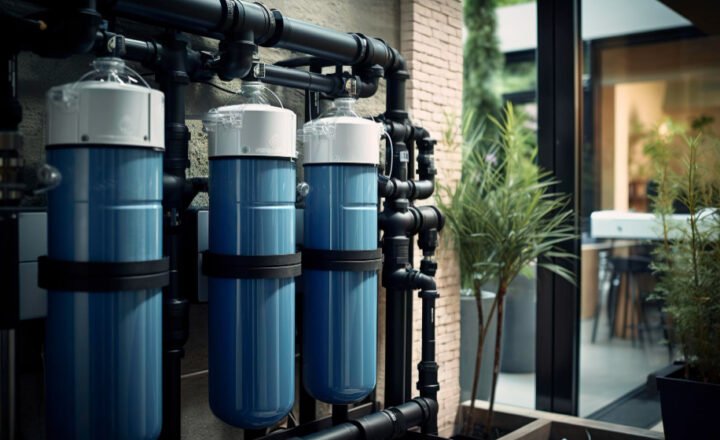
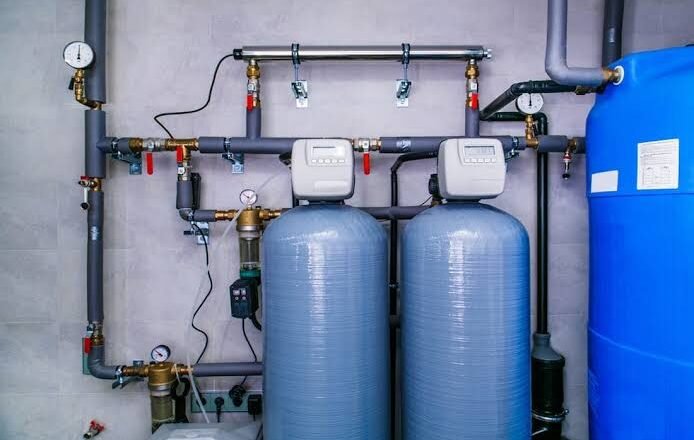
Water treatment works at the source. A softener may reduce hardness, while an iron filtration system can target iron-related staining. Carbon filtration may help reduce chlorine taste and certain odours. Other concerns, such as bacteria or specific chemical contaminants, require different technologies.
This distinction is important because no single treatment system solves every water problem. Choosing equipment without knowing what is in the water can lead to disappointing results. A system designed for hardness, for example, may not remove iron effectively, and a basic carbon filter may not be suitable for every groundwater concern.
Testing Before Choosing a Treatment System
Water testing should be the foundation of any treatment decision. A laboratory test can help identify hardness levels, iron, manganese, pH, total dissolved solids, bacteria, and other possible contaminants. The appropriate testing panel depends on whether the property uses a private well, municipal water, or another supply.
For private well owners, routine testing is especially important because groundwater conditions can change over time. Flooding, nearby construction, agricultural activity, or septic-system problems may affect the supply. Municipal water users may also benefit from testing at the tap if they notice unusual taste, odour, or staining that is not explained by the local water report.
Once the results are available, a water specialist can recommend treatment based on actual conditions. This usually leads to a more effective and cost-conscious solution than purchasing a general-purpose filter simply because it is widely advertised.
Practical Ways to Reduce Water Problems
Along with installing suitable treatment equipment, homeowners can take a few simple steps to manage water-related concerns. Clean faucet aerators regularly, inspect showerheads for scale, and follow the manufacturer’s maintenance schedule for filters or softeners. Replace cartridges on time rather than waiting until water flow becomes noticeably weak.
If your home has a water softener, check salt levels and make sure the regeneration cycle is working correctly. For filtration systems, use replacement media that matches the manufacturer’s specifications. Improvised or overdue maintenance can reduce performance and allow the original problem to return.
It is also helpful to keep records of water tests, filter changes, and recurring symptoms. Patterns can make it easier to identify whether a problem is seasonal, related to plumbing, or connected to changes in the water source.
A Cleaner Home Starts with Better Water Knowledge
Hardness, odours, and mineral marks are common water concerns, but they don’t have to become permanent household frustrations. The key is to look beyond the visible symptom and understand what is causing it.
Testing provides clarity, and the right treatment system can protect plumbing, improve cleaning results, reduce maintenance, and make everyday water use more pleasant. Rather than guessing or relying only on surface-level cleaning, homeowners can take a measured approach that addresses the source of the problem.
Good water management isn’t about buying the most complicated equipment. It’s about knowing what your water contains, choosing treatment that matches those conditions, and maintaining the system properly. That small investment in understanding can make a surprisingly big difference to the comfort and efficiency of a home.