There are some household upgrades you notice immediately. A new sofa changes a room. Better lighting makes a kitchen feel warmer. A quieter dishwasher is obvious the first night you run it. Water filtration is a little different. When it works properly, the biggest change may simply be that you stop thinking about your water.
You fill a glass from the kitchen faucet. You make coffee. You cook pasta. You fill a reusable bottle before heading out. Nothing dramatic happens, and that’s actually the point. Good drinking-water treatment fits into everyday life without demanding much attention.
For homeowners who rely on tap water but aren’t completely happy with its taste, smell, appearance, or overall quality, modern filtration can offer a practical solution. The trick is knowing what you want to improve before choosing equipment. A filter should solve a real problem, not just look impressive under the kitchen sink.
Start by Understanding Your Water
Every home has a slightly different water story. Municipal water supplies can vary by treatment plant and local conditions, while private wells are influenced by groundwater, soil, and surrounding geology. Even within the same neighborhood, two houses can have noticeably different water characteristics.
That’s why testing is such a useful first step.
A water test can provide information about hardness, chlorine, sediment, pH, iron, minerals, and other substances depending on the type of testing performed. Once you know what’s actually present, choosing a treatment system becomes much less of a guessing game.
It’s easy to buy a filter because a friend recommended it. But what works beautifully in one kitchen might do very little in another. Water treatment is personal in that sense.
What People Usually Mean by Better Drinking Water
When someone says they want better drinking water, they don’t always mean the same thing. One homeowner may be bothered by chlorine taste. Another may be concerned about dissolved substances. Someone with well water might be dealing with sulfur odors, iron staining, or sediment.
Sometimes the goal is simply water that tastes pleasant enough that everyone in the family reaches for the tap instead of a plastic bottle.
That familiar clean, refreshing experience is often what people have in mind when they describe their goal as bottle-quality water. But the phrase shouldn’t be taken to mean that every filtration system produces water identical to commercially bottled water. Different bottles, sources, and treatment processes vary considerably.
The more useful question is whether your home’s water has been treated appropriately for its specific characteristics.
Why Carbon Filtration Remains Popular
Carbon filtration has been around for a long time, and there’s a reason it remains common. Activated carbon can reduce certain compounds that affect taste and odor, including chlorine in many applications.
For households whose main complaint is that tap water tastes unpleasant, carbon filtration may provide a noticeable improvement without requiring an elaborate setup.
It’s also commonly used as one stage within a larger system. In that role, carbon can complement other technologies rather than trying to handle every water-quality issue by itself.
But there’s an important distinction here: carbon filters aren’t universal contaminant removers. Their effectiveness depends on the filter design, contact time, water chemistry, and the specific substances being targeted. A product label may sound broad, but real-world performance depends on details.
Reverse Osmosis Works Differently
Reverse osmosis is another widely used approach for drinking-water treatment. Instead of relying primarily on adsorption, it uses pressure to move water through a specialized membrane.
These semi-permeable membranes contain extremely small pathways. Water can pass through while many dissolved substances are rejected and sent toward the drain stream. That makes reverse osmosis useful when a homeowner needs treatment beyond what a basic sediment or carbon filter can provide.
However, reverse osmosis isn’t a magic wand either. The system needs appropriate water pressure, regular maintenance, and timely filter and membrane replacement. It can also remove minerals that some people may prefer to retain, depending on their water source and treatment goals.
A well-designed system takes those factors into account rather than treating reverse osmosis as an automatic answer.
Multiple Stages Can Work Together
Water treatment is often most effective when different technologies are given different jobs.
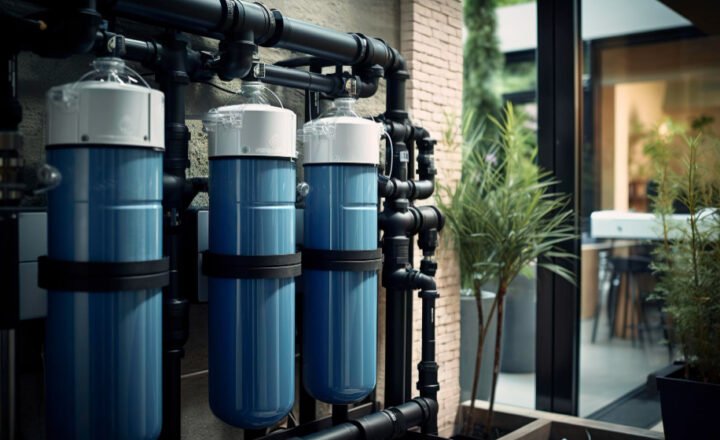
For example, a sediment filter can capture particles before they reach more sensitive components. A carbon stage can address taste and odor. A reverse osmosis membrane can provide additional treatment for certain dissolved substances, followed by a polishing filter if the system design calls for one.
That’s where three or four-stage water filtration can be useful. The value isn’t in simply having more stages. It’s in making sure each stage performs a meaningful role.
A four-stage setup that doesn’t match the home’s water chemistry is still poorly designed. On the other hand, a properly selected multi-stage system can provide several layers of treatment while keeping the drinking-water process relatively simple for the homeowner.
Think of it like a small team. More people don’t automatically produce better results. Each person needs a job.
Point-of-Use Filtration Keeps Things Practical
Not every homeowner needs to treat every drop of water entering the property.
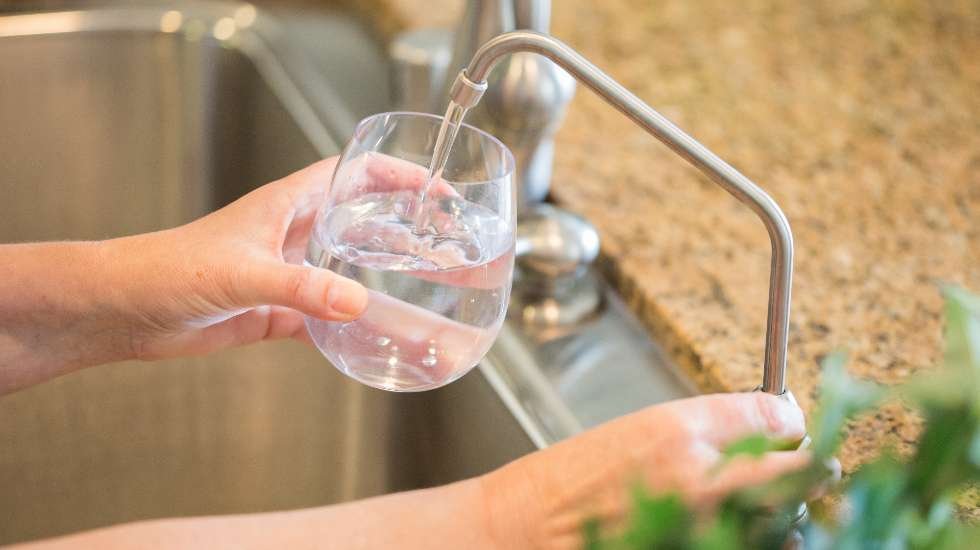
If drinking and cooking are the primary concerns, a point-of-use system beneath the kitchen sink can be a sensible option. It delivers treated water through a dedicated faucet while leaving the rest of the home’s water supply unchanged.
This approach can also reduce unnecessary treatment. There’s little reason to use specialized drinking-water technology for water going into the garden hose.
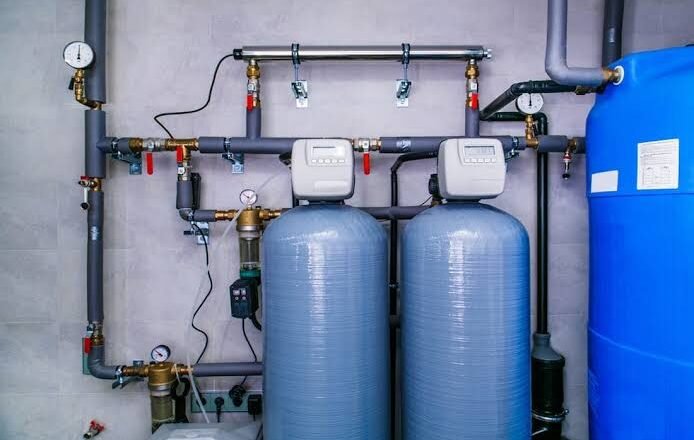
Whole-house treatment can make more sense when the problem affects showers, fixtures, appliances, or plumbing throughout the property. In some homes, combining whole-house conditioning with a dedicated drinking-water system creates a practical balance.
Taste Matters More Than People Admit
Water quality isn’t just a laboratory conversation. It’s part of daily routines.
Think about your morning coffee. If the water has an odd taste, you’ll probably notice it. The same goes for ice, tea, soup, rice, and anything else where water is an ingredient.
A filtration system that improves taste and odor can make these ordinary things more enjoyable. And when drinking water tastes good, people may naturally choose it more often.
Still, taste should never be treated as a safety test. Water can look and taste perfectly fine while containing substances that aren’t detectable by the senses. That’s another reason testing matters.
Maintenance Is Part of the Deal
No filtration system should be installed and forgotten.
Filters collect the materials they’re designed to capture. Membranes eventually need replacement. O-rings, connections, tanks, and other components can also require attention over time.
Before purchasing a system, understand its maintenance schedule. Find out how often filters need replacing, what replacement parts cost, and whether professional servicing is recommended.
A little routine care can protect the system’s performance and prevent a small maintenance issue from becoming an expensive repair.
Don’t Let the Price Tag Make the Decision
It can be tempting to compare systems by upfront price alone. That’s rarely the whole story.
Consider installation, replacement filters, membrane costs, water usage, service requirements, and expected lifespan. A less expensive system may cost more over time if its filters need frequent replacement or it doesn’t properly address the original problem.
Likewise, the most expensive setup isn’t automatically necessary.
The right system is the one that matches your water, your household, and your actual priorities.
A Better Glass of Water Starts With Better Information
Modern filtration gives homeowners more options than ever, but having more choices doesn’t mean the decision needs to be complicated.
Start with testing. Identify the issue. Decide whether you’re primarily trying to improve taste and odor, reduce sediment, address specific dissolved substances, or solve a broader water-quality concern. Then choose technology based on those findings.
The best filtration system is often the one you barely notice after installation. You turn on the faucet, fill your glass, and get water that tastes clean and feels right for your home.
No bottles to carry. No unnecessary equipment. Just a simple improvement to something you use every single day.