Water plays a bigger role in business than most people realize. It runs through kitchen equipment, boilers, coffee machines, washing systems, bathrooms, cooling equipment, production lines, and countless other parts of a commercial property. When the water is causing trouble, the effects can show up in places you might not expect—higher maintenance bills, damaged equipment, inconsistent product quality, or complaints from customers and employees.
That’s why commercial water treatment shouldn’t be treated as an afterthought. The right setup starts with understanding what is actually happening with the water and then choosing equipment that addresses those specific concerns. Sometimes the answer is simple. Other times, it takes a combination of technologies.
Hard Water Can Quietly Become an Expensive Problem
Hard water contains elevated levels of minerals, particularly calcium and magnesium. These minerals aren’t necessarily a health concern at typical concentrations, but they can create plenty of practical headaches inside a commercial facility.
Scale buildup is one of the biggest issues. Over time, mineral deposits can collect inside pipes, heaters, boilers, dishwashers, coffee equipment, and other water-using appliances. A thin layer might not seem like much, but repeated buildup can reduce efficiency and increase the amount of cleaning and maintenance required.
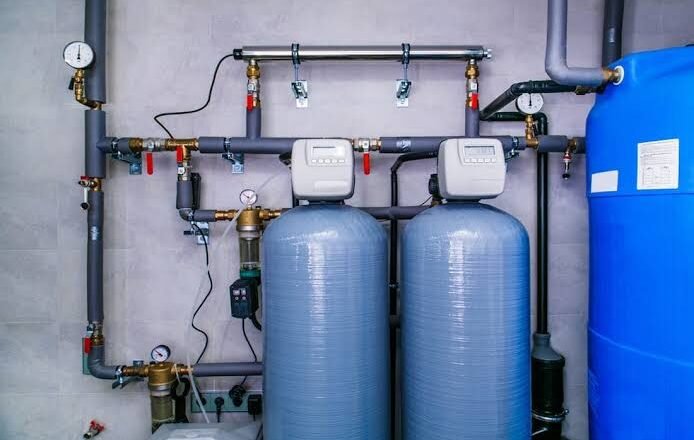
For businesses that use large amounts of heated water, the problem can become especially noticeable. Choosing properly sized commercial water softeners can help reduce hardness before it causes unnecessary scaling throughout the system.
The important word here is “properly sized.” A system designed for a small office may be completely inadequate for a restaurant or industrial facility. Water demand, peak flow, hardness levels, and operating schedules all need to be considered.
Start With a Water Test
It’s difficult to choose the right treatment equipment when you don’t know what you’re treating. A professional water analysis can reveal hardness, sediment, dissolved minerals, chlorine, iron, microbial concerns, and other characteristics that may influence the treatment plan.
Testing also prevents businesses from spending money on equipment they don’t really need. If the primary issue is sediment, for example, a complicated treatment train may be unnecessary. If dissolved solids are the concern, however, a basic sediment filter won’t solve the problem.
Water quality can change over time, too. A facility that had no major problems five years ago may now be dealing with different conditions because of changes in the municipal supply, plumbing, groundwater, or building usage.
In other words, test first. Buy second.
Reverse Osmosis for Demanding Water Applications
Some businesses need water with a much lower concentration of dissolved substances than ordinary filtered water can provide. Restaurants may want high-quality water for beverages and cooking. Laboratories, healthcare facilities, manufacturing operations, and other specialized environments can have even stricter requirements.
In these situations, commercial reverse osmosis systems can be an important part of the treatment strategy. Reverse osmosis uses a semipermeable membrane to separate many dissolved substances from water, producing a treated water stream suitable for applications where lower dissolved-solids levels are important.
It’s a powerful technology, but it isn’t magic. RO systems have specific feed-water requirements and produce a reject stream during operation. Pretreatment may also be necessary to protect the membrane from sediment, chlorine, hardness, or other issues.
That’s why commercial RO should be selected as part of a complete water-treatment plan rather than simply installed because it sounds like the most advanced option.
Filtration Is Often the First Line of Defense
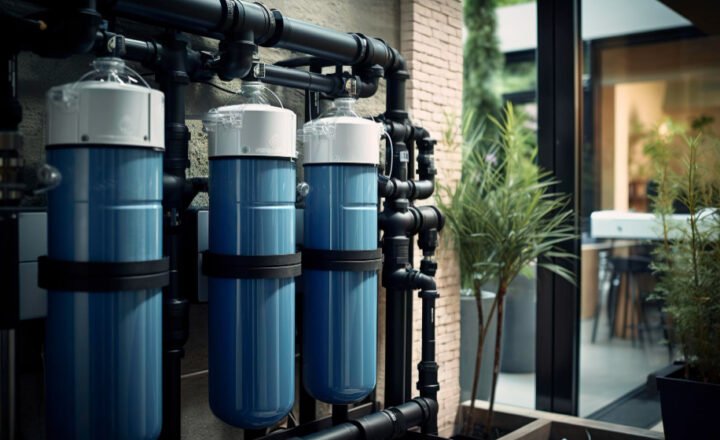
Before water reaches more specialized equipment, basic filtration can make a meaningful difference. Sediment filters can capture particles such as sand, dirt, rust, and other suspended material. Carbon filtration can help address certain taste, odor, and chemical concerns.
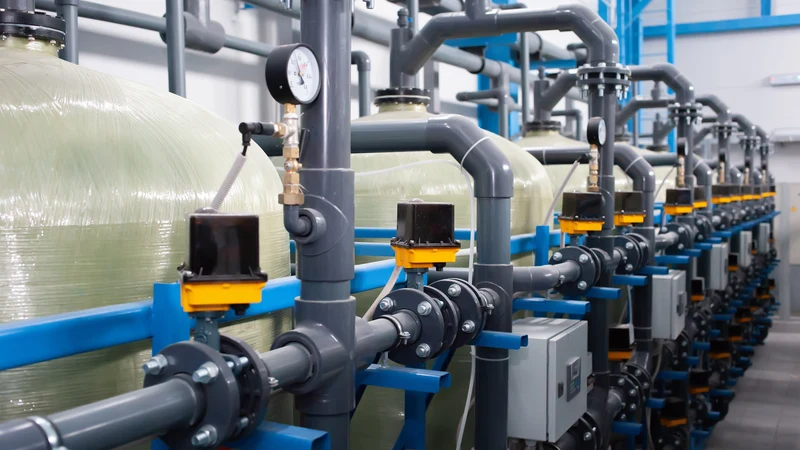
The right filtration systems depend on the size of the facility and the characteristics of the incoming water. A small office with a modest water demand has very different requirements from a hotel, restaurant, or manufacturing plant operating around the clock.
Flow rate matters more than many people expect. If a filter is too small, water pressure can suffer when demand increases. If it is too large, the business may be paying for capacity it never uses. Proper sizing helps strike a better balance between performance and operating cost.
Consider the Business, Not Just the Water
Every commercial property has its own rhythm. A restaurant might experience huge spikes in water use during lunch and dinner. A hotel can have unpredictable demand depending on occupancy. A manufacturing facility may have steady process-water requirements throughout the day.
Those patterns should influence the treatment design.
Peak flow is particularly important. A system that works perfectly during quiet hours may struggle when several fixtures and machines operate simultaneously. Storage tanks, pumps, controls, and treatment capacity may all need to be considered depending on the application.
It’s a bit like choosing an air-conditioning system for a building. You wouldn’t size it based only on how comfortable the building feels at 7 a.m. when nobody is there.
Maintenance Is Part of the Investment
Installing water treatment equipment is only the beginning. Filters need to be replaced, membranes need attention, tanks may require cleaning, and mechanical components should be inspected periodically.
Neglecting maintenance can gradually reduce performance. Worse, a poorly maintained system may give operators a false sense of security because the equipment is physically still sitting there.
Businesses should understand the expected maintenance schedule before installation. Ask how often filters or membranes need replacement, what consumables cost, how service is handled, and whether technicians are available when something goes wrong.
For a busy commercial property, reliable support can be just as valuable as the equipment itself.
Watch for Signs of Water-Related Problems
Some warning signs are obvious. Others are subtle.
White deposits around fixtures can point toward hardness. Unusual odors may indicate water-quality or plumbing concerns. Reduced flow could be caused by clogged filters, scale, or another restriction. Equipment that seems to require cleaning more frequently than before may also be reacting to water conditions.
Businesses should pay attention to these changes instead of waiting for a major failure. Small problems are generally easier and cheaper to address than a damaged boiler, clogged process line, or failed piece of expensive equipment.
Keeping basic records can help, too. Tracking filter changes, service visits, equipment performance, and water-testing results makes it easier to spot trends.
A Thoughtful Treatment Plan Pays Off
Good commercial water treatment is rarely about buying the biggest system or stacking as many technologies together as possible. It’s about solving the right problem.
Start with water testing. Understand how the property uses water. Identify the equipment or processes that are most sensitive to water quality. Then select treatment technologies based on those real requirements.
For one business, that may mean softening and sediment filtration. Another may need carbon treatment and reverse osmosis. A larger facility could require several treatment stages working together.
The best system is the one that quietly supports the business without becoming a daily source of frustration. When water quality is handled thoughtfully, equipment can operate more reliably, maintenance becomes easier to manage, and the people running the business can focus on what actually matters—serving customers, producing good work, and keeping things moving.