Water is one of those household things you tend to notice only when it stops behaving the way you expect. The shower feels different. Your glasses come out of the dishwasher covered in spots. A faucet that was shiny a few months ago now has a chalky ring around it.
None of these problems seem especially serious on their own. But when they keep happening, they can become surprisingly irritating. You clean the same fixture again, buy another bottle of cleaning product, or wonder why your appliances seem to need more attention than they used to.
In many homes, hard water can be part of the explanation. Understanding how it behaves can help you decide whether simple cleaning is enough or whether the underlying water deserves a closer look.
The First Clue May Be Your Bathroom
Bathrooms tend to reveal water problems quickly because water is constantly hitting glass, tile, metal fixtures, and other surfaces.
One common sign is soap that won’t lather or leaves residue. Hardness minerals such as calcium and magnesium can interact with soap, making it more difficult to create the rich lather people expect.
Instead of rinsing cleanly, soap can combine with minerals and leave a film behind. You may notice it on the shower wall, bathtub, sink, or even your skin.
That doesn’t necessarily mean your soap is bad. Sometimes the water is simply making the product work harder than it should.
Those White Deposits Aren’t Just Dirt
If you’ve ever scrubbed a faucet only to see white marks return a few days later, you know how annoying mineral deposits can be.
Hard water contains dissolved minerals. When water evaporates, those minerals can remain behind on surfaces. Repeated exposure gradually creates visible residue.
Over time, scale buildup on faucets and showerheads can become more than a cosmetic nuisance. Aerators may become restricted, showerhead openings can clog, and fixtures may become harder to clean.
A mild deposit can often be removed with appropriate descaling. But if the same buildup keeps returning, it may make sense to investigate the water itself instead of treating the surface over and over.
Hard Water Can Affect More Than the Bathroom
The kitchen is another place where mineral-heavy water can make itself known.
Glasses may come out of the dishwasher with cloudy spots. Stainless-steel fixtures may show water marks. Coffee equipment can develop deposits if water containing significant minerals is heated repeatedly.
These signs don’t automatically prove that your water is hard, but when several appear throughout the house, they form a useful pattern.
Testing can provide a much clearer picture than trying to interpret every stain yourself.
Appliances May Feel the Effects Slowly
One tricky thing about water-related appliance problems is that they usually don’t happen overnight.
Minerals can accumulate gradually inside water heaters, dishwashers, coffee makers, and other water-using equipment. Depending on the appliance and the level of hardness, this may contribute to reduced appliance performance over time.
Water heaters are particularly worth watching because heating water can encourage minerals to deposit on internal components.
That doesn’t mean hard water will automatically ruin an appliance. Appliance design, maintenance, temperature, water chemistry, and usage all play a role.
Still, if equipment seems to be working harder or requiring more frequent cleaning, water quality is one factor worth considering.
Laundry Can Tell a Story, Too
Some homeowners first notice hard water when their laundry doesn’t seem quite right.
Clothes may feel stiff after washing, towels might lose some of their softness, or detergent may seem less effective. It’s tempting to simply add more detergent, but that isn’t always the best answer.
Water hardness can affect how detergents behave. Using excessive detergent can also leave residue behind, so increasing the amount indefinitely can create another problem.
Before changing your entire laundry routine, consider whether the water itself could be contributing to what you’re seeing.
Skin and Hair Complaints Can Be Complicated
Some people notice that their skin feels tight after bathing or that their hair seems dull or difficult to rinse.
Hard water may contribute because minerals can interact with soap and shampoo. However, skin and hair conditions have many possible causes, including weather, water temperature, personal-care products, and individual sensitivity.
So it’s better to treat water hardness as one possible factor rather than assuming it’s always responsible.
If several household signs point toward mineral-heavy water, testing can help you decide whether it deserves attention.
Testing Is the Sensible Starting Point
Before buying a treatment system, find out what you’re actually dealing with.
A water test can provide information about hardness and other characteristics of the water. Depending on the source and the concerns involved, additional testing may be appropriate.
This is especially useful for private well owners, because well-water conditions can vary and may require periodic monitoring.
Testing can also save money. A system designed to address one issue won’t necessarily solve another. If your main concern is hardness, for example, a treatment approach designed for hardness makes more sense than buying a generic filter that promises to handle everything.
When a Water Softener Makes Sense
If testing confirms significant hardness, a properly selected water softener may help.
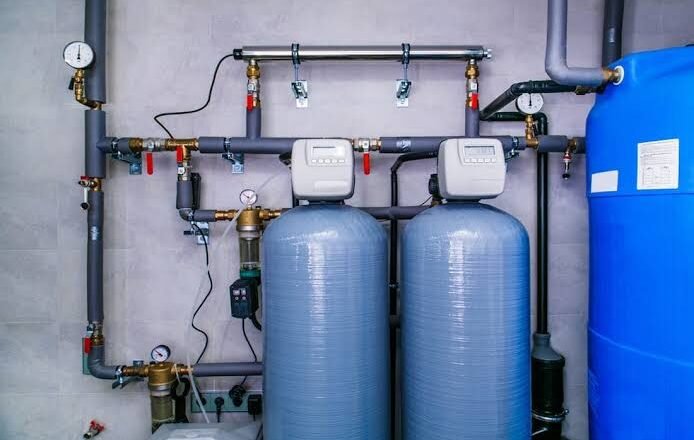
Traditional softeners commonly use ion exchange to reduce calcium and magnesium in the water. Some modern units use metered controls to manage regeneration based on household water use.
The right system depends on several factors, including household size, daily consumption, hardness level, installation space, and maintenance preferences.
Bigger isn’t automatically better. The goal is to choose equipment that matches your home’s actual needs.
And remember, a softener is primarily designed for hardness. It shouldn’t be treated as a universal answer for every possible water-quality concern.
Don’t Forget Regular Maintenance
Even the right treatment system needs attention.
Salt-based softeners need appropriate salt levels and periodic service. Filters need to be replaced according to their intended schedule. Fixtures and appliances may still need occasional cleaning.
It’s easy to put these jobs off because nothing looks wrong right now. But preventive maintenance is usually much easier than dealing with a system that has stopped performing properly.
A simple calendar reminder can be enough. Keep track of filter changes, service visits, and water testing dates.
The Best Solution Starts With the Actual Problem
Hard water can be frustrating precisely because its effects are scattered around the house.
You might see it as soap residue in the shower, spots on dishes, deposits around faucets, or equipment that gradually doesn’t seem to perform quite as well.
Those signs are worth noticing, but they’re not a reason to panic or immediately purchase expensive equipment.
Start with the basics. Identify the water source. Test when appropriate. Understand the level of hardness and consider how it’s affecting your household.
From there, the solution becomes much clearer.
Sometimes all you need is a better cleaning routine. Sometimes a water softener or another treatment system makes sense. Either way, the goal is the same: reduce unnecessary hassle and make your home’s water work better for everyday life.
Good water treatment isn’t about chasing perfection. It’s about understanding what’s coming through your pipes and making thoughtful improvements where they actually matter.