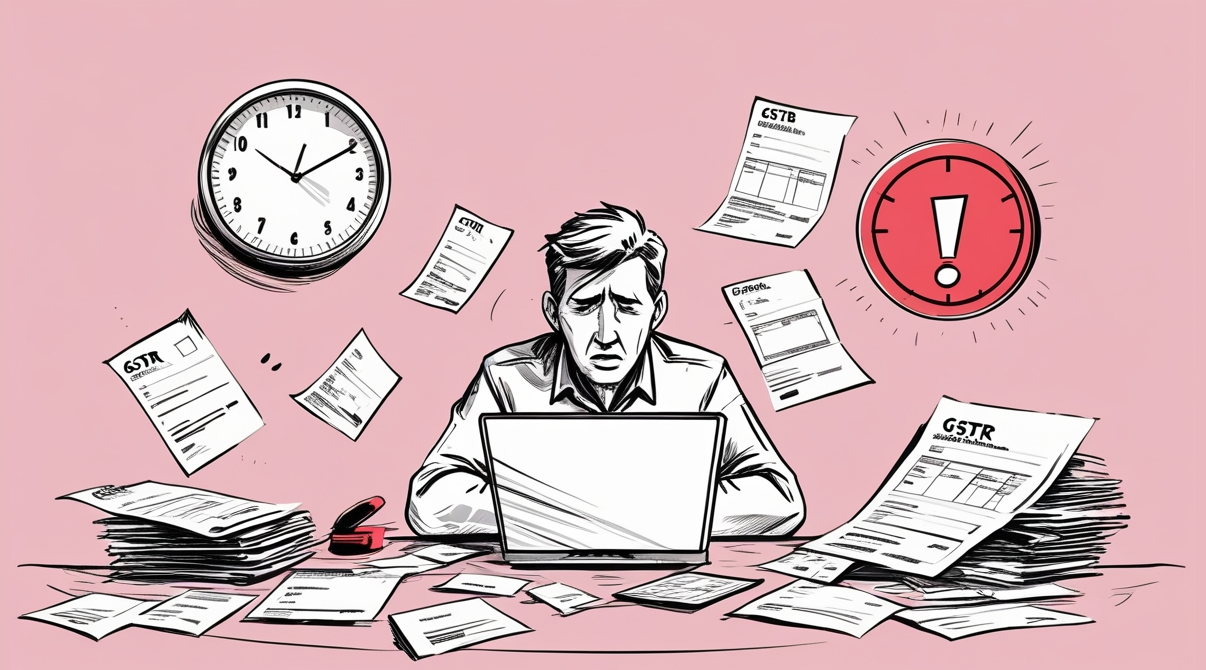
“GST return filing time is here again” – this line alone stresses out a lot of small business owners. Honestly, how to file GST returns feels confusing the first time, but once it clicks, it’s just a 15-20 minute job every month.
Let’s walk through the entire process step by step.
What Is a GST Return and Who Needs to File It
Quick answer: A GST return is a document where a business reports its sales, purchases, and tax collected or paid to the government. Any business registered under GST needs to file this at regular intervals.
Different Types of GST Returns
This part feels confusing at first, since there are different returns for different purposes:
- GSTR-1 (sales details) – monthly or quarterly
- GSTR-3B (summary return with tax payment) – monthly
- GSTR-4 (for businesses under the composition scheme) – annually
- GSTR-9 (annual return) – yearly
Documents You Need Before Filing
I’ve seen that bad documentation causes 80% of filing delays. Keep these ready:
- Sales invoices for the month
- Purchase invoices
- Bank statement
- Previous month’s GSTR filing (for reference)
- HSN codes for products
[link to related guide on preparing a balance sheet]
How to File GSTR-1 – Step by Step
- Log in to the GST portal (gst.gov.in)
- Go to the Returns Dashboard and select the relevant tax period
- Select GSTR-1 and fill in sales invoice details
- Mention B2B and B2C sales separately
- Preview and submit, then verify with DSC or EVC
How to File GSTR-3B
This return matters because actual tax payment happens here:
- Fill in the summary of outward and inward supplies
- Claim eligible ITC (Input Tax Credit)
- Tax liability calculates automatically
- Pay the net GST amount
- Submit and file the return
Penalties for Late Filing
This part often gets ignored, but the penalty can add up. Late fees run ₹50 per day (₹20 for nil returns), plus 18% annual interest on the tax amount.
Common Mistakes in GST Filing
I once saw a client enter the wrong GSTIN on an invoice, and it threw off the entire reconciliation. Common mistakes:
- Invoice number mismatches
- Using the wrong HSN code
- Claiming ITC without checking eligibility
- Missing deadlines due to no reminders
[link to a related step-by-step video tutorial]
Do I Need to Hire a CA
For small businesses with fewer transactions, you can file it yourself. But as the business grows, hiring a CA or accountant saves time and reduces the chance of errors.
FAQs
Q1. How often do I need to file a GST return? Monthly or quarterly, depending on the business type, and GSTR-9 is filed annually.
Q2. Do I need to file a nil return too? Yes, if there were no transactions, filing a nil return is still mandatory.
Q3. What happens if I file late? Both late fees and interest apply, and it can also affect your ITC claims.
Q4. Can I file GST returns myself without a CA? Yes, the GST portal is fairly user-friendly, and small businesses can manage it themselves.
Q5. What exactly is Input Tax Credit? It’s the tax you’ve already paid on your purchases, which you can offset against your final tax liability.
Conclusion
Learning how to file GST returns feels tricky the first time, but with regular practice, it becomes routine. Keep deadlines in mind, stay organized with documents, and don’t hesitate to bring in professional help as your business grows. Filing on time isn’t just about avoiding penalties – it protects your business’s credibility too.