There are some household expenses you notice immediately. A broken appliance, a leaking pipe, a heating bill that suddenly jumps — those get your attention.
Water quality is different. Its effects are usually quieter. You notice the white film around the faucet, the shower glass that never seems to stay clean, or the way soap behaves differently in the bathroom. You might even find yourself buying cleaning products more often without realizing that the water itself could be contributing to the problem.
For many homes, the issue comes down to water hardness and the minerals dissolved in the supply. Managing those characteristics can make everyday routines simpler, but choosing and installing the right equipment requires a little thought. It’s not really about buying the most expensive system. It’s about finding something that fits the home.
Hard Water Changes Small Daily Habits
Hard water contains minerals such as calcium and magnesium. As water evaporates, those minerals can remain on surfaces, creating the familiar spots and deposits found around faucets, sinks and shower doors.
The effect can also be felt during cleaning. Soap may not lather as readily, and detergent can behave differently when mixed with mineral-rich water.
Over time, homeowners sometimes compensate by using more products. More soap, extra detergent, stronger cleaners — it becomes almost automatic.
But if hardness is the underlying issue, simply using more products isn’t necessarily the best answer.
Why Using More Soap Isn’t Always Better
It seems logical: if soap doesn’t seem to work well, use more of it.
Unfortunately, that can create its own problems. Excess soap can leave residue behind, especially when combined with hard-water minerals. Clothes may feel less soft after washing, surfaces can require additional rinsing, and cleaning becomes a little more labor-intensive.
Addressing water hardness can potentially mean less soap, detergent, and water is needed for certain household tasks. The exact savings depend on the home’s water chemistry, appliance settings and everyday habits, so it’s better to think of this as a potential benefit rather than a guaranteed number.
Still, even modest improvements can make a difference over hundreds of washing and cleaning cycles.
Water Treatment Is About the Whole Household
One useful way to think about water treatment is to look beyond the kitchen faucet.
Water is used throughout the home. It’s in showers, washing machines, dishwashers, toilets, water heaters and outdoor connections. If hardness is affecting the supply, the impact isn’t limited to one room.
A whole-home approach can therefore make sense when the goal is to address a water-quality characteristic throughout the plumbing system.
Of course, not every household needs whole-home treatment. If the concern is limited to drinking-water taste, for example, a point-of-use filtration system might be more appropriate.
The treatment should follow the problem.
Choosing Equipment Requires More Than a Quick Online Search
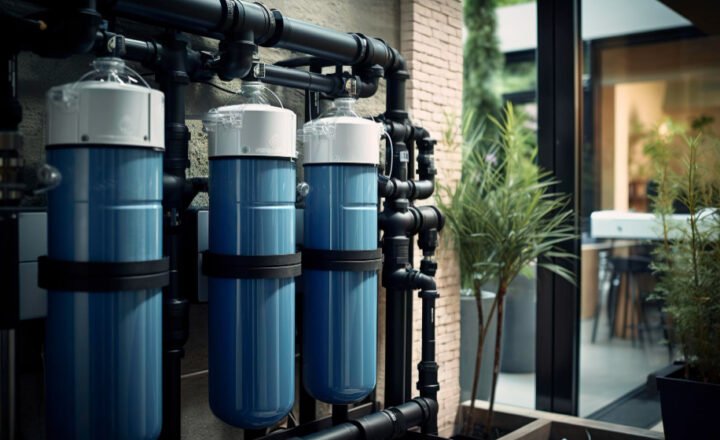
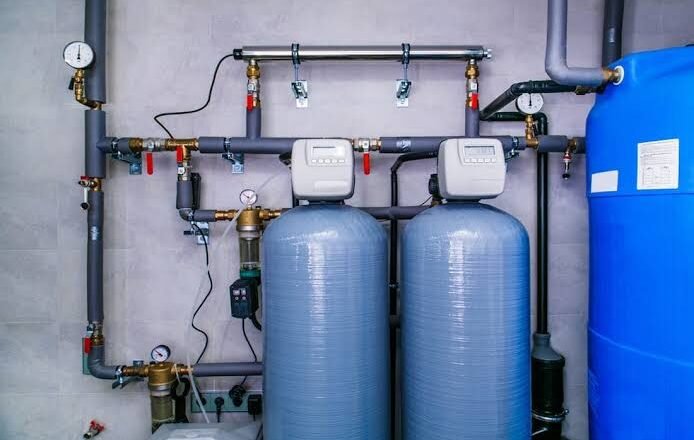
Water treatment equipment can look deceptively simple from the outside. A tank, a control head, a few connections — how complicated could it be?
The installation and setup are where things become more important.
System capacity, incoming pressure, household water consumption, plumbing configuration and drainage requirements all need to be considered. Incorrect sizing or poor installation can affect performance even when the equipment itself is perfectly good.
That is why working with a professional installer can be valuable. An experienced installer can evaluate the home’s setup, explain what the equipment is designed to do and make sure the system is configured appropriately.
It’s not about making the process fancy. It’s about avoiding preventable mistakes.
Proper Sizing Matters More Than People Think
Imagine buying a refrigerator that’s too small for your family. You’d probably notice the problem pretty quickly.
Water treatment systems aren’t quite as obvious, but capacity matters just as much.
A household with several bathrooms and high daily water consumption may have very different requirements from a small home occupied by one or two people. Water hardness levels also influence how much treatment capacity is needed.
If a system is undersized, it may need to regenerate or service itself more frequently than expected. If it’s dramatically oversized, you may be paying for capacity you don’t really use.
Good system selection is about balance.
Maintenance Shouldn’t Be an Afterthought
Every water treatment system has some kind of maintenance requirement. Filters need replacement. Softening systems may need salt. Components may need cleaning or inspection.
Before installation, ask what ongoing care looks like. How often do filters need changing? What happens if the system stops working? Are replacement parts easy to obtain?
These questions may feel less exciting than comparing features, but they’ll matter much more six months down the road.
A simple maintenance routine that’s easy to follow is usually better than an advanced system that becomes a forgotten piece of equipment in the garage.
Good Customer Service Has Real Value
Even well-designed equipment can eventually need attention. A control setting may need adjustment. A filter could require replacement. You may simply have a question about something that doesn’t look quite right.
That’s where customer support becomes important.
A water-treatment provider should be able to explain maintenance requirements, help troubleshoot basic issues and provide service when equipment needs professional attention. Clear communication matters, particularly when the system is relatively new and you’re still learning how it works.
Before choosing a provider, find out what support is included and what happens after installation. A company that disappears once the equipment is installed isn’t necessarily offering the best long-term value.
Watch Your Water Pressure
Flow and pressure are easy to overlook.
A treatment system introduces additional components into the plumbing, so the equipment needs to be selected with household demand in mind. If multiple showers, faucets or appliances operate at once, an undersized or poorly configured system may become noticeable.
Pay attention to changes after installation. If water pressure suddenly seems weaker throughout the home, don’t simply accept it as normal. Have the system checked.
Sometimes a small adjustment can make a significant difference.
Don’t Treat Every Water Problem the Same Way
Hardness isn’t the only thing that affects household water.
Sediment, chlorine, iron, sulfur compounds, taste and odor concerns, and other water characteristics may require different treatment methods. A softener isn’t a universal filter, and a basic carbon filter isn’t designed to solve every possible water issue.
Testing helps clarify what’s actually happening.
If you’re dealing with private well water, regular testing becomes especially useful because conditions can change. Municipal water can also vary based on supply conditions and plumbing.
The more you know, the easier it is to choose intelligently.
Think About the Cost Over Several Years
Price matters, but looking only at the purchase price can be misleading.
Consider installation, replacement filters, salt or other consumables, electricity if applicable, routine service and potential repairs. A system with a slightly higher upfront cost might be more practical if it is easier to maintain and has readily available parts.
Likewise, the cheapest option isn’t necessarily a bargain if it requires frequent attention.
Think beyond the first invoice.
A Better Water System Should Make Life Simpler
The real benefit of good water treatment isn’t owning a sophisticated piece of equipment. It’s what happens afterward.
Maybe the shower glass takes less effort to clean. Maybe appliances require less attention. Maybe laundry feels easier, or you simply stop thinking about the white deposits that used to appear everywhere.
Those improvements may seem small, but they’re repeated day after day.
Start with testing. Understand your water. Consider how your household actually uses it. Then choose equipment that’s appropriately sized and professionally installed, with maintenance and support you can realistically manage.
The best water system is usually the one that quietly does its job in the background. No drama, no constant tinkering — just better water and fewer little household frustrations competing for your attention.