“The idea is great, I just need funding” – I’ve heard this line more times than I can remember. Truth is, how startup funding works isn’t as simple as it sounds. I’ve watched founders build a pitch deck and chase investors without understanding the basics first, and most of them get rejected.
Let’s talk practically here, not like a movie script.
The Stages of Startup Funding
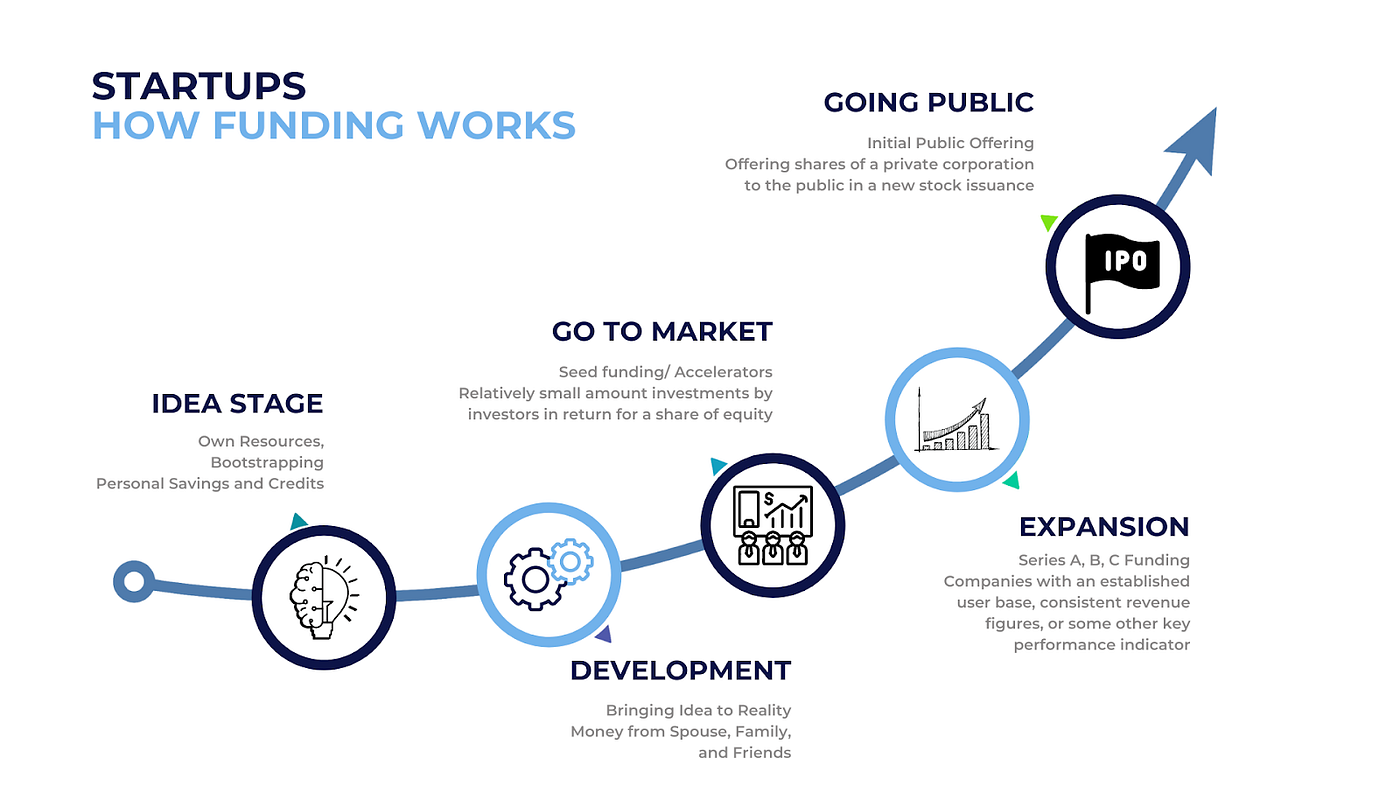
Quick answer: Startup funding typically moves through five stages – bootstrapping, seed funding, Series A, Series B, and eventually growth or IPO stage. Each stage comes with different investor expectations.
Most founders start by putting in their own money or borrowing from family – that’s bootstrapping. Once there’s some traction, seed investors step in.
Bootstrapping – The Step Everyone Skips
I think a lot of new founders want to go straight to VCs, when honestly, testing your model with your own money first matters more. Investors want to see that you’ve taken some risk too.
Who Are Angel Investors and How Do You Reach Them
Angel investors are usually experienced businesspeople or ex-founders who put their own money into early-stage startups.
Ways to reach them:
- Direct outreach on LinkedIn (surprisingly effective)
- Startup events and pitch competitions
- Platforms like AngelList
- Warm introductions through your existing network
Warm introductions work best – cold emails get maybe a 2-3% response rate, while a referral can push that to 20-30%.
Getting Funding from Venture Capital
Once your business has some traction and is ready to scale, that’s when VC funding makes sense. VCs invest bigger amounts, but their expectations grow just as fast.
[link to related guide on building a pitch deck]
Government Schemes That Actually Help
India has a few schemes worth knowing about:
- Startup India Seed Fund Scheme
- SIDBI Fund of Funds
- MSME schemes (some startups qualify)
- State-level startup policies (varies by state)
These are especially useful if you don’t have a strong existing network.
What Should Be in a Pitch Deck
A good pitch deck shouldn’t run past 10-12 slides. I’ve seen founders show up with 30 slides, and the investor checks out after five minutes.
Slides that actually matter:
- Problem statement
- Solution
- Market size
- Business model
- Traction and numbers
- Team
- The ask (how much and for what)
Common Mistakes Founders Make While Raising
I once watched a founder talk more about “vision” than the actual product. Investors want numbers, not just dreams.
Common mistakes:
- Overestimating valuation
- Ignoring competition in the pitch
- Unrealistic financial projections
- A weak team slide
Crowdfunding – An Option That’s Underrated
Platforms like Kickstarter aren’t huge in India yet, but some product-based startups have done well with it. If your product is consumer-facing, it’s worth exploring.
FAQs
Q1. Do I need a registered company to raise startup funding? Yes, most investors only invest in a registered entity like a Pvt Ltd or LLP.
Q2. How much can I raise in a seed round? Generally between ₹50 lakh and ₹5 crore, depending on the business and traction.
Q3. Can I raise funding without revenue? Yes, especially if the idea is strong and the team is credible.
Q4. What’s the difference between an angel investor and a VC? An angel invests their own money; a VC manages a fund made up of multiple investors’ money.
Q5. How long should building a pitch deck take? 2-3 weeks is reasonable – rushing it usually hurts quality.
Conclusion
There’s no single formula for how startup funding works, but reaching the right investor at the right stage makes a real difference. Keep your pitch deck sharp, back it up with numbers, and put in some of your own risk first. If you’re still bootstrapping, start preparing for that seed round now.